

Origin of matcha: where it comes from, Japan or China, and what is the best matcha


Origin of Matcha: Where it Comes From, Japan or China, and What is the Best Matcha in the World
The origin of matcha is one of the most common questions for those beginning to take an interest in this tea. For years, it has been directly associated with Japan, but the history is more complex and starts much earlier.
Understanding where matcha comes from is not just a cultural matter; it's also key to recognizing the true quality of ceremonial matcha. Not all origins are equal, and knowing them makes a difference.
What is the Real Origin of Matcha
Matcha originates in China, specifically during the Song dynasty. At that time, powdered tea was already consumed, whisked with hot water, creating a foamy texture very similar to modern matcha.
This method was not accidental. It developed within monastic contexts, especially in areas like Jingshan, where tea was part of concentration and meditation practices.
Over time, this way of consuming tea disappeared in China but was brought to Japan by Buddhist monks. There, it was not only preserved but also evolved into what we now know as ceremonial matcha.
Matcha Japan or China: Which Country Has the Best Matcha
One of the most common searches is whether the best matcha is Japanese or Chinese. The answer is not simple, because it depends on whether we are talking about historical origin or current quality.
China is the origin of matcha, but Japan is the country that has perfected its cultivation and production over centuries. That's why, today, Japanese matcha dominates the premium segment.
Even so, some regions of China are recovering traditional techniques and gaining relevance in the high-quality market.
Where is the Best Matcha in the World Produced
When analyzing the global market, three regions clearly stand out for their importance, whether for history, quality, or production volume.
Jingshan, China
It is considered the birthplace of matcha. Its importance is historical and cultural. Although it lost prominence for centuries, it is currently re-emerging with more careful productions. Matcha Zen currently cultivates and produces matcha in Jingshan, and all exports are done by air, as it is the way to maintain matcha with the highest quality standards.
Uji, Japan
It is the most globally recognized region for ceremonial matcha. Key techniques such as shade cultivation and stone grinding have been developed here, allowing for the highest quality matcha. Similarly, it is also the most expensive region, as production is very limited, and with the great increase in demand, its price has not stopped rising.
Nishio, Japan
It is one of the areas with the highest matcha production in Japan. It stands out for its consistency and for offering a balance between quality and accessibility.
Why the Origin of Matcha is Important
The origin of matcha directly influences its flavor, color, and texture. Factors such as climate, soil, and cultivation techniques determine the final quality of the product.
High-quality ceremonial matcha usually comes from traditional regions where every phase of the process is controlled. Therefore, knowing the origin allows for better decisions when choosing matcha.
Conclusion on the Origin of Matcha
Matcha originated in China, developed in Japan, and is now produced in different regions with very different quality levels. Understanding this journey is fundamental to truly appreciating good matcha.
If you are looking for quality, origin remains one of the most decisive factors.
Why the Origin of Matcha Depends on the Microclimate and Not Just the Country
When discussing the origin of matcha, it is often simplified into a comparison between Japan and China. However, this view is too narrow. The true quality of matcha depends less on the country and more on the specific conditions under which it is cultivated.
Factors such as altitude, temperature, and sun exposure have a direct impact on the chemical composition of the leaf. It is not an aesthetic issue, but a structural one. They determine the amount of chlorophyll, amino acids like L-theanine, and consequently, the final flavor.
For example, moderate temperatures between 12 and 25 degrees allow for slower plant growth. This favors the accumulation of sweet compounds and reduces bitterness. When the climate is too hot, growth accelerates, and quality usually drops.
Altitude also plays an important role. In higher areas, fog is more frequent and acts as a natural filter for solar radiation. This creates an effect similar to the artificial shading used in Japan, but naturally. The result is a smoother matcha with greater depth.
The orientation of the mountain is another rarely mentioned factor. Plantations that do not receive direct sunlight throughout the day tend to produce leaves richer in chlorophyll. In contrast, excessive sun exposure increases catechin, which translates to more astringency.
The soil completes the picture. The best matchas come from slightly acidic soils with good water retention and rich in minerals. This allows for balanced nutrient absorption and more stable plant development.
Why a Well-Cultivated Jingshan Matcha Can Surpass a Japanese One
Although Japan has perfected matcha cultivation, this does not mean that all its productions are superior. When key factors are analyzed, it is evident that matcha cultivated under optimal conditions can surpass one from a more prestigious region but with worse variables.
In areas like Jingshan, where there are mountains with frequent fog, stable temperatures, and suitable soils, very favorable conditions for tea cultivation can be found. If modern process control is added to this, the result can directly compete with Japanese matchas.
The difference is in the detail. A well-oriented plantation, with less direct radiation and adequate thermal balance, can generate leaves with a higher concentration of amino acids and less bitterness. This directly impacts the flavor, texture, and color.
In contrast, matcha grown in an area with excessive sun or more aggressive temperatures, even if it is from Japan, may lose some of these qualities. Therefore, reducing quality to the country of origin is a mistake.
Matcha is, in essence, a product of microclimate. And that is where historical regions like Jingshan have a real margin to stand out when conditions are right.
The Impact of Solar Radiation on Matcha
Solar radiation is one of the most determining and least visible factors. When the plant receives too much direct light, it increases the production of catechins, responsible for the bitter and astringent taste.
For this reason, shading techniques are used in Japan before harvesting. This process reduces radiation and forces the plant to produce more chlorophyll and L-theanine, responsible for the umami flavor.
In mountainous regions like Jingshan, this effect can occur naturally thanks to the fog and the orientation of the terrain. This reduces the need for artificial intervention and can lead to very interesting flavor profiles.
When the balance between light, temperature, and humidity is correct, the result is a rounder matcha, with less bitterness and greater complexity. That is the true indicator of quality.
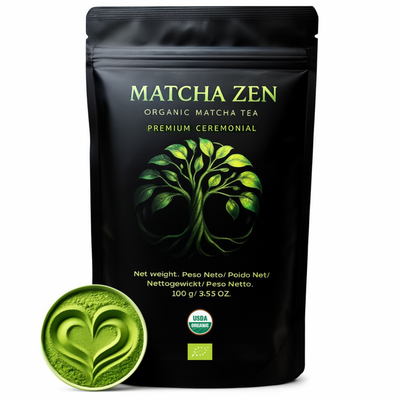 Organic Ceremonial Matcha Tea 100g | 1st Harvest | 1st Grade | Matcha Zen
€20,99
Translation missing: en.products.product.view
Organic Ceremonial Matcha Tea 100g | 1st Harvest | 1st Grade | Matcha Zen
€20,99
Translation missing: en.products.product.view
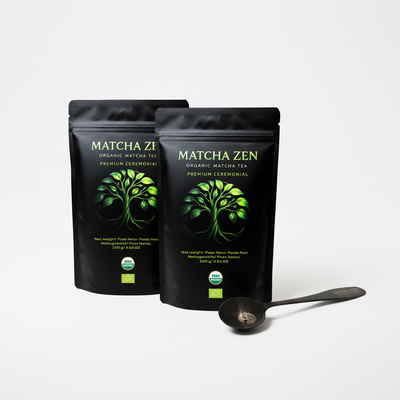 2x Organic Ceremonial Matcha Tea 100g Pack with 5% Discount + Spoon
€45,58
Translation missing: en.products.product.view
2x Organic Ceremonial Matcha Tea 100g Pack with 5% Discount + Spoon
€45,58
Translation missing: en.products.product.view
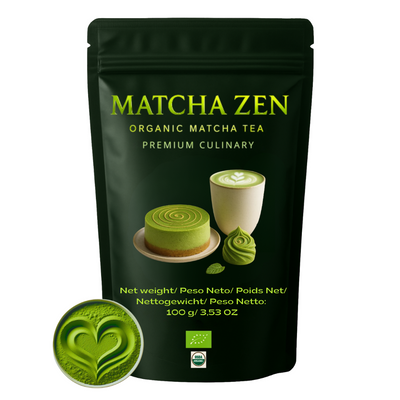 Organic Culinary Matcha Tea 100g | Matcha Zen
€11,99
Translation missing: en.products.product.view
Organic Culinary Matcha Tea 100g | Matcha Zen
€11,99
Translation missing: en.products.product.view
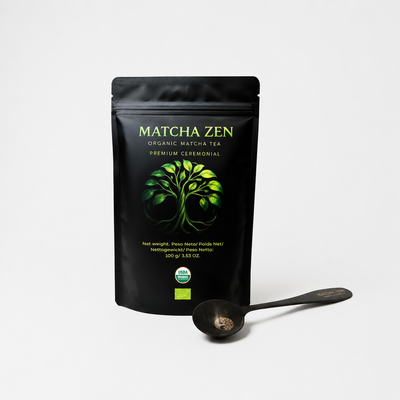 Pack of 2 Organic Ceremonial Matcha Tea 100g + Spoon 5% Discount.
€24,99
Translation missing: en.products.product.view
Pack of 2 Organic Ceremonial Matcha Tea 100g + Spoon 5% Discount.
€24,99
Translation missing: en.products.product.view