

The Origin of Matcha Zen
Our story
The origin of Matcha Zen: organic matcha direct from Jingshan
I tried dozens of matcha varieties in Spain. Most ended up in the monstera plant pot. And not by accident. Dull colors, flat flavor, and "ceremonial" labels that didn't hold up in the cup. Matcha that had passed through too many hands… each one making it a little more expensive.
That's when I understood something: real matcha was barely making it here.
Three families. 1,200 years of tradition. Zero intermediaries.
Matcha Zen is born from a simple idea: if the product is truly good, it doesn't need intermediaries, inflated marketing, or absurd prices. That's why we work directly with three families in Jingshan, where matcha has been part of the culture for over 1,200 years. Organic cultivation, first harvest, slow shading, and granite stone grinding. No shortcuts.
Here, we don't sell "premium matcha" as just a label. We sell what is considered normal there.

How can you tell?
- In the first sip. The color is intensely green, vibrant, not dull.
- Creamy, dense texture, with a fine foam that lasts.
- Smooth and slightly sweet flavor, with a fresh vegetal undertone that is neither bitter nor astringent.
- You don't need to add anything for it to taste good: no milk, no sweetener, no embellishments.
- Real umami, the kind only provided by the shaded first harvest.
What is in the bowl
You drink the whole leaf, so catechins, L-theanine, caffeine, chlorophyll and fibre all end up in the bowl. On the theanine and caffeine combination, a systematic review with meta-analysis of 50 randomised trials in healthy people, published in Nutrition Reviews in 2025 (Payne et al., PMID 40314930), measured attention and mood tests in the first and second hour after intake, and the authors stress that the confidence intervals leave the size of the effect open.
- Total L-theanine 1.2% per datasheet MZ-FT-MAT-CER-001.
- Caffeine around 3.2 g per 100 g, roughly 64 mg in a 2 g bowl.
- Catechins (EGCG), chlorophyll and fibre from the milled leaf.
- One 100 g pack makes about 50 bowls.
Matcha vs. coffee: real performance
- Coffee 10-15 g per cup · ~50 ml beverage.
- Matcha Zen 2 g per cup · 450-600 ml of water.
- More quantity, greater yield, and a much more balanced experience.
- Surprisingly low cost per cup, without sacrificing ceremonial quality.

No tricks. No overpricing.
Just real matcha, direct from the source. Matcha Zen doesn't aim to be a complicated brand. It wants to be something much more useful: that moment of the day when you pause, prepare your cup, and feel everything align a little better. Try it once, you'll notice the difference.
Frequently Asked Questions
Why Jingshan and not Uji (Japan)?
Jingshan is the historical birthplace of matcha: the technique of ground tea originated here in the 9th century, before traveling to Japan with Buddhist monks. The three families we work with maintain the traditional method with organic cultivation, slow shading, and granite stone grinding. Real ceremonial quality, without the Japanese intermediary's markup.
What does "first harvest" mean?
The first harvest is the early spring collection, when young leaves concentrate more L-theanine, chlorophyll, and amino acids. It is the sweetest, creamiest matcha with the most umami. Subsequent harvests are used for culinary or industrial purposes.
Why are there no intermediaries?
We buy directly from the producing families in Jingshan. No importers, no distributors, no white labels. This allows us to offer ceremonial quality at an honest price and real traceability from the plant to your cup.
How many cups come from a 100g package?
Approximately 50 cups, using the standard dose of 2g per cup (450-600 ml of water). The cost per cup is much lower than that of specialty coffee.
Is it organically certified?
Yes. Our matcha is grown following 100% organic practices: no pesticides, no herbicides, and no chemical fertilizers. Shading is done with traditional nets, and grinding is performed in granite stone mills, not industrial ones.
How does it differ from supermarket matcha?
Supermarket matcha is usually late harvest, blends, or coarsely ground green tea powder. It has a yellowish or brownish color, a bitter taste, and a sandy texture. Ours is first harvest organic stone-ground: vibrant green, creamy, and with natural sweet umami.
Start your ritual


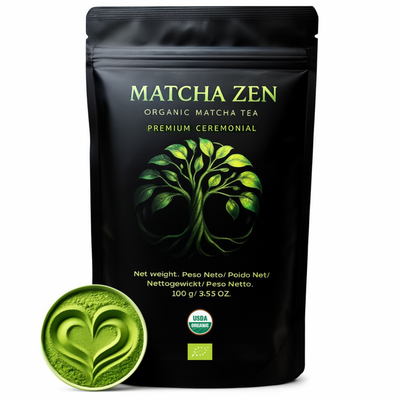 Organic Ceremonial Matcha Tea 100g | 1st Harvest | 1st Grade | Matcha Zen
€20,99
Translation missing: en.products.product.view
Organic Ceremonial Matcha Tea 100g | 1st Harvest | 1st Grade | Matcha Zen
€20,99
Translation missing: en.products.product.view
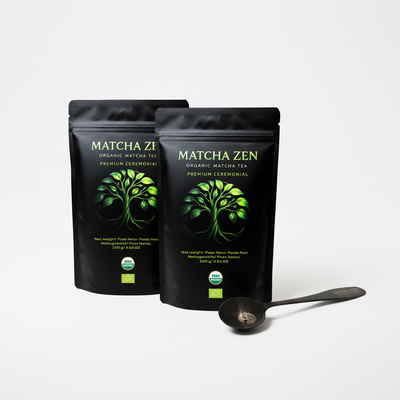 2x Organic Ceremonial Matcha Tea 100g Pack with 5% Discount + Spoon
€45,58
Translation missing: en.products.product.view
2x Organic Ceremonial Matcha Tea 100g Pack with 5% Discount + Spoon
€45,58
Translation missing: en.products.product.view
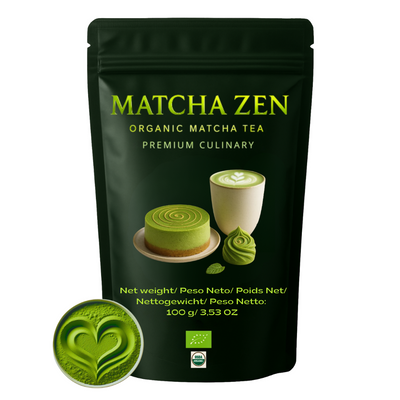 Organic Culinary Matcha Tea 100g | Matcha Zen
€11,99
Translation missing: en.products.product.view
Organic Culinary Matcha Tea 100g | Matcha Zen
€11,99
Translation missing: en.products.product.view
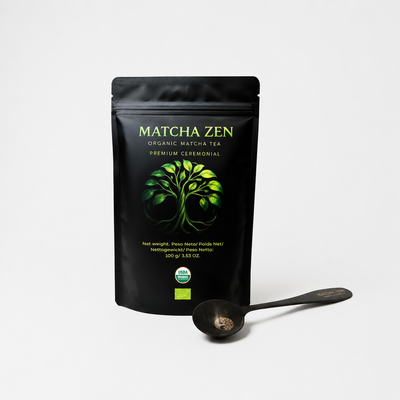 Organic Ceremonial Matcha Tea 100g + Stainless Steel Measuring Spoon Pack | Matcha Zen
€24,99
Translation missing: en.products.product.view
Organic Ceremonial Matcha Tea 100g + Stainless Steel Measuring Spoon Pack | Matcha Zen
€24,99
Translation missing: en.products.product.view