

Matcha as a status symbol in the US: price and hype


Matcha as a status symbol in the United States
In American cities a matcha latte now costs about twice what a regular coffee does, and by market data reported by MarketWatch it rose by as much as 235% over the past year. Three things explain the premium: the raw material is genuinely scarce, the drink photographs well, and there is an audience that pays precisely for that.
Why matcha and not something else
Coffee is infrastructure. It is on every corner, it costs little, and nobody can tell from across the room which one you ordered. Matcha is the opposite: visibly green, slow to make, and carrying a vocabulary of harvest, shading and grind that you either know or do not.
That is the appeal for what Americans have started calling quiet luxury. No logo, no visible price, just a detail that only the initiated read. A drink as membership card, with foam on top.
What social media did to it
The second factor is the camera. Matcha films beautifully: the powder falls in slow motion, the colour lifts off the wood, and the whisk makes a sound that apparently soothes people. Matcha hashtags together run to billions of views, and every one of those clips sells the ritual along with the tea.
A practice that spent centuries in Japan with very little to do with an audience is now a mass format. Preparation has become part of the product, which explains the price without excusing it.
The shortage is real
Japan produces around 4,600 tonnes of tencha a year, the leaf that matcha is milled from. Japanese production has been at its ceiling since 2023, Chinese production peaked in early 2025, and retail demand has tripled. Shading, harvest and stone milling cannot be rushed: a granite wheel turns out roughly 40 g an hour.
Analysts expect prices to keep rising. For buyers, the practical consequence is that harvest and origin now matter more than the tin they arrive in.
How much of this has reached Britain
A matcha latte in central London now sits between £4.50 and £6. Holland & Barrett stocks several grades, Waitrose put matcha in the wellness aisle rather than with the tea, and Pret added it to the menu board. The café markup buys oat milk and floor space, since the same bowl made at home costs around 38p.
The odd part is the order of events. The drink became a status object first, and only then did anyone start asking what grade they were drinking.
What you can actually check before buying
Four things, trend or no trend. Harvest first: first flush, not second or third. Then colour: bright jade rather than olive. Then grind: fine enough to stay suspended in water instead of settling at the bottom. Then price per bowl rather than per tin, since 100 g makes about 50 bowls.
Our Matcha Zen Ceremonial is first harvest, shade grown in Jingshan (China), processed at Zhejiang Camel Transworld in Yuhang (Hangzhou) and stone milled slowly. 100 g for £19.00, about 50 bowls.
For the markers that separate the real thing from green powder, see our guide to spotting authentic matcha, and for what you get per pound, our comparison by price per 100 g.
Is the hype worth it
The price on an American café board has little to do with the cup and a great deal to do with the postcode. The powder itself is worth it if you make it at home and know the grade you are buying. Everything above that is self-presentation, which has never been cheap.
Sources (publicly accessible)
- Prices and trade: marketwatch.com
- Global shortage: time.com
- Hype in Japan: nytimes.com
- TikTok effect: retail-insider.com
- Demand analysis: intelligence.coffee
- Matcha mania 2025: businesstoday.in
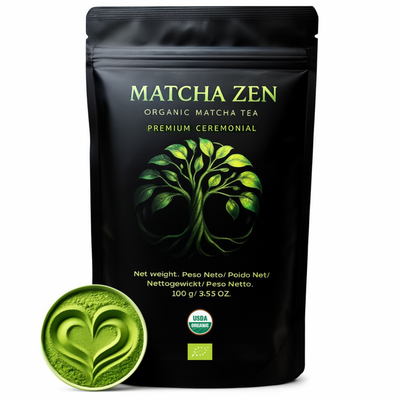 Organic Ceremonial Matcha Tea 100g | 1st Harvest | 1st Grade | Matcha Zen
€20,99
Translation missing: en.products.product.view
Organic Ceremonial Matcha Tea 100g | 1st Harvest | 1st Grade | Matcha Zen
€20,99
Translation missing: en.products.product.view
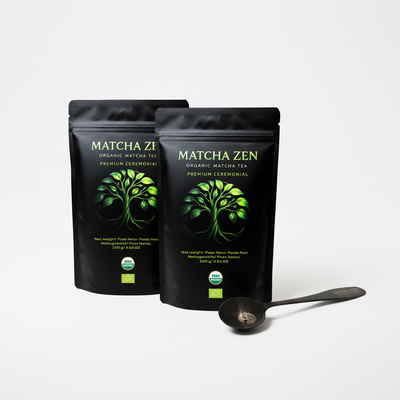 2x Organic Ceremonial Matcha Tea 100g Pack with 5% Discount + Spoon
€45,58
Translation missing: en.products.product.view
2x Organic Ceremonial Matcha Tea 100g Pack with 5% Discount + Spoon
€45,58
Translation missing: en.products.product.view
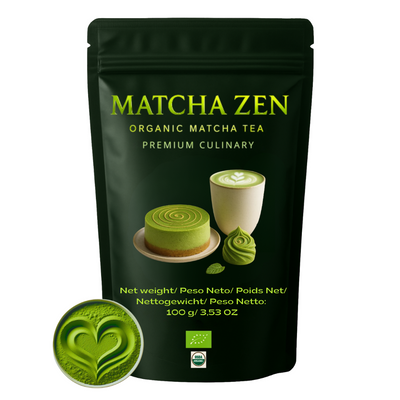 Organic Culinary Matcha Tea 100g | Matcha Zen
€11,99
Translation missing: en.products.product.view
Organic Culinary Matcha Tea 100g | Matcha Zen
€11,99
Translation missing: en.products.product.view
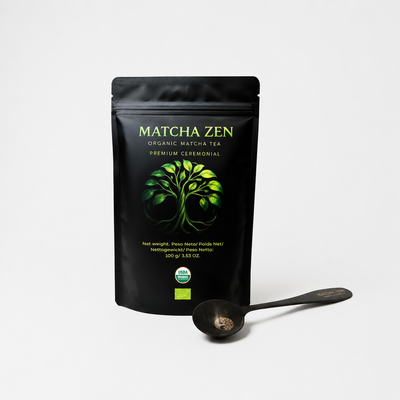 Organic Ceremonial Matcha Tea 100g + Stainless Steel Measuring Spoon Pack | Matcha Zen
€24,99
Translation missing: en.products.product.view
Organic Ceremonial Matcha Tea 100g + Stainless Steel Measuring Spoon Pack | Matcha Zen
€24,99
Translation missing: en.products.product.view